Source Fishing Tackle Box for Stream, River, and Ocean Beach Fishing
Compare 25 verified fishing tackle box options from Chinese manufacturers featuring durable ABS and PE materials. Buyers can evaluate specifications like waterproof standards, dimensions, and customization availability for stream, river, and ocean beach fishing applications.
Key considerations
Products List


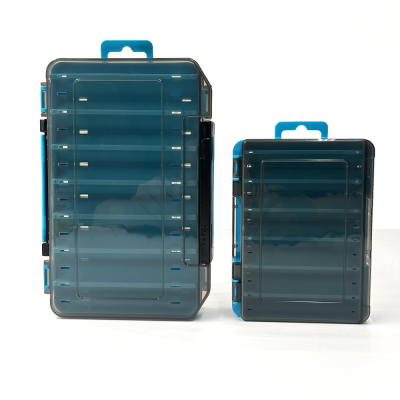
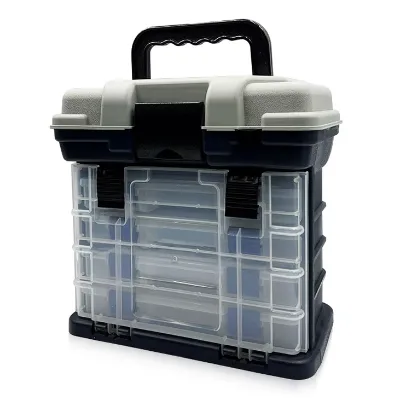


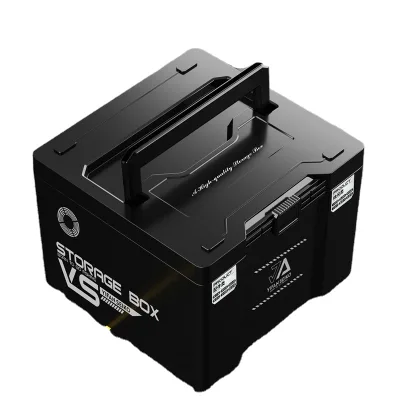
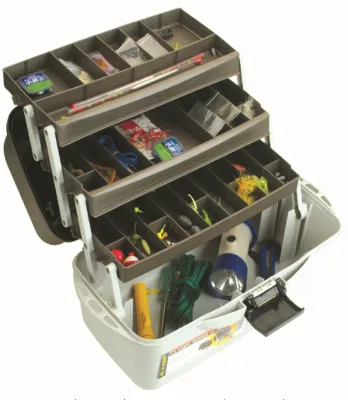
Comprehensive Sourcing Guide
Strategic Sourcing Guide for Fishing Tackle Boxes
The global demand for specialized fishing equipment continues to expand, driven by both recreational enthusiasts and professional anglers seeking durable, efficient storage solutions. For B2B procurement professionals, sourcing a fishing tackle box requires a nuanced understanding of material science, dimensional logistics, and supplier capabilities. This guide synthesizes available market data to provide a disciplined framework for evaluating potential suppliers and products. The objective is to ensure that procurement decisions are grounded in verified attributes rather than marketing assertions, minimizing risk while maximizing operational efficiency.
Technical Specifications and Material Composition
The foundational element of any fishing tackle box procurement strategy is the precise definition of technical specifications. Based on observed market data, the primary material composition for high-performance units is often Acrylonitrile Butadiene Styrene (ABS). This polymer is selected for its superior impact resistance and chemical stability, which are critical when the product is exposed to saltwater environments. In contrast, some listings indicate Polyethylene (PE) as a material, suggesting a variation in product lines that may prioritize flexibility over rigid structural integrity. Buyers must verify the specific material grade for each SKU, as the choice between ABS and PE directly influences the product's lifespan and suitability for specific fishing conditions.
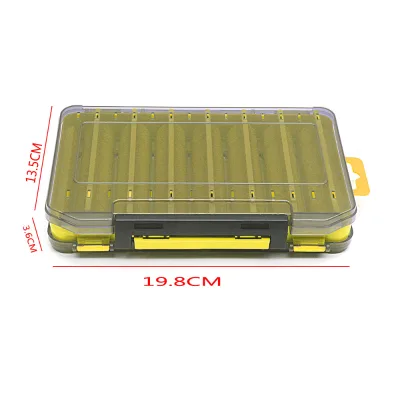
Dimensional consistency is another critical technical parameter. Market observations reveal a wide variance in box dimensions, ranging from compact units measuring approximately 13.8cm by 10.5cm by 3cm to larger storage solutions at 19.5cm by 13.5cm by 3.6cm. Furthermore, packaging standards often cite external carton dimensions such as 36cm by 25cm by 12cm or 15cm by 10cm, which indicates that the "product standard" often refers to the shipping carton rather than the internal box itself. Procurement teams must distinguish between the single package size, often cited as 20cm by 15cm by 10cm, and the bulk shipping dimensions to accurately calculate freight costs. The weight of individual units is also a key metric, with observed single gross weights around 0.353 kg and specific unit weights noted at 100g. These figures are essential for optimizing container loading and determining shipping rates.
Compliance, Certification, and Environmental Standards
When evaluating fishing tackle boxes, compliance with environmental and safety standards is increasingly important for B2B buyers targeting eco-conscious markets. The available data explicitly mentions "Eco-Friendly" as a feature, suggesting that some manufacturers are adopting sustainable production practices or using recyclable materials. However, specific certification bodies or compliance standards (such as ISO or REACH) are not universally listed in the provided context. Therefore, buyers should not assume that all listed products carry specific certifications without direct verification from the supplier.
The "Waterproof Standard" is a functional attribute that must be rigorously tested. While the term "Waterproof" appears in the specifications, the exact IP rating or the specific testing protocol used to validate this claim is not defined in the general data. In a procurement context, "Waterproof" is a functional observation that requires validation. Buyers should request test reports detailing the specific water pressure resistance or immersion duration the box can withstand. Additionally, the "OEM Acceptable" attribute indicates that suppliers are open to customization, which often involves adhering to the buyer's specific compliance requirements regarding branding and material safety. It is imperative to clarify whether the OEM process includes third-party testing for the customized components to ensure they meet the buyer's destination market regulations.
Cost Drivers and Pricing Dynamics
Understanding the cost structure of fishing tackle boxes is vital for budgeting and margin analysis. The observed price range in the market spans from $0.90 to $19.75 USD. This significant variance is not arbitrary but is driven by several distinct factors. The primary cost driver is the material composition; ABS units generally command a higher price point than PE alternatives due to the raw material cost and the complexity of the injection molding process required for rigid boxes. Secondary drivers include the complexity of the internal organization, such as the inclusion of rod holders or specialized compartments, and the quality of the hardware, such as latches and hinges.
Packaging and logistics also play a substantial role in the final landed cost. The data indicates that products are shipped in "Strong Carton" or "Carton" packaging, with some specifically designated for "Sea Transportation." The volume of the packaging relative to the product weight affects the freight cost per unit. For instance, a box with a single package size of 20x15x10 cm will have different volumetric weight implications compared to a bulkier unit. Furthermore, the "Fast Delivery" attribute suggests that some suppliers may offer expedited shipping options, which can increase the unit cost but reduce inventory holding time. Buyers must balance the unit price against the total cost of ownership, including freight, duties, and potential inventory carrying costs.
Typical Applications and Usage Scenarios
Fishing tackle boxes are designed for a diverse range of applications, and the procurement strategy must align with the intended use case. The market data highlights several specific usage environments, including "Stream, River, Lake, Ocean Beach Fishing, Ocean Boat Fishing, Ocean Rock Fishing, Reservoir Pond, and Other." This breadth of application necessitates a product that is not only durable but also adaptable. For example, units intended for "Ocean Beach Fishing" or "Ocean Boat Fishing" must withstand harsh saltwater exposure and physical abrasion from rocks or boat surfaces.
The "Hardness" attribute is listed as "Hard," which is suitable for protecting fragile lures and tackle from crushing forces during transport. The "Feature" of being "Heat-resisting" is particularly relevant for applications in tropical climates or vehicles where internal temperatures can rise significantly. Additionally, the "Capacity" is noted as "below 20 L," indicating that these are primarily personal or small-group storage solutions rather than large-scale commercial storage units. The "Applicable People" attribute lists both "Male" and "Female," suggesting that the design should be ergonomic and accessible to a broad demographic. Understanding these specific use cases allows buyers to select products that match the durability and feature requirements of their target customer base.
Supplier Evaluation and Customization Capabilities
Selecting the right supplier involves more than just comparing unit prices; it requires a deep dive into their manufacturing capabilities and flexibility. The data confirms that "Customization" is available, and "OEM" services are acceptable. This indicates that suppliers are capable of producing private-label goods, which is a common requirement for B2B buyers looking to build their own brand identity. The "Brand Name" BST is observed in the data, but buyers should not limit their search to a single manufacturer. Instead, they should evaluate suppliers based on their ability to meet specific customization requests, such as logo placement, color variations, or internal layout modifications.
The "MOQ" (Minimum Order Quantity) is a critical factor in supplier selection. The observed range spans from 2 to 5000 pieces. This wide range suggests a market with both small-batch manufacturers and large-scale industrial producers. A buyer with a high-volume requirement might target suppliers with an MOQ of 5000 pieces to secure better unit economics, while a startup or niche retailer might seek suppliers with lower MOQs to minimize initial capital outlay. The "Packaging" attribute of "10000" suggests that some suppliers may have specific batch sizes or packaging configurations that impact the order quantity. Buyers must verify if the MOQ applies to the total order value or specific SKUs to avoid unexpected financial commitments.
Quality Control and Long-Term Procurement Considerations
Ensuring consistent quality is paramount in the fishing tackle industry, where product failure can lead to lost inventory and damaged reputation. The "Quality" attribute is described as "High-Quality," but this is a subjective claim that requires objective verification. Buyers should implement a robust quality control (QC) protocol that includes pre-shipment inspections focusing on the structural integrity of the ABS or PE material, the functionality of latches, and the accuracy of dimensions. The "Single gross weight" and "Single package size" data points provide benchmarks for QC teams to verify that the shipped product matches the agreed-upon specifications.
Long-term procurement considerations involve building a resilient supply chain. The "Ships From" location is consistently listed as "China," with specific origins noted as "Jiangsu, China." While this provides a clear geographical context, buyers should assess the supplier's logistics capabilities, including their ability to handle "Sea Transportation" and their track record for "Fast Delivery." Reliability in lead times is crucial for maintaining inventory levels, especially given the seasonal nature of fishing gear demand. Furthermore, the "Number of Items" being listed as "1" suggests that the standard unit is a single box, but buyers should clarify if multi-packs or bulk sets are available for different market segments. Establishing a long-term partnership with a supplier who can consistently deliver on quality, customization, and delivery timelines will provide a competitive advantage in the marketplace.
Comparative Analysis of Product Attributes
To facilitate decision-making, the following table summarizes the key technical and logistical attributes observed in the market data. This comparison highlights the diversity in specifications that buyers must navigate when selecting a supplier.
| Attribute Category | Observed Variations | Procurement Implication |
|---|---|---|
| Material | ABS, PE | Verify material grade for durability and chemical resistance. |
| Dimensions | 13.8x10.5x3 cm to 19.5x13.5x3.6 cm | Calculate freight costs based on specific SKU dimensions. |
| Capacity | Below 20 L | Suitable for personal/small group use; not for commercial bulk. |
| MOQ | 2 to 5000 pcs | Align order volume with supplier capacity and budget. |
| Packaging | Carton, Strong Carton, Sea Transportation | Ensure packaging meets shipping and storage requirements. |
| Features | Waterproof, Heat-resisting, Durable, Portable | Validate specific feature claims through testing or samples. |
| Origin | China (Jiangsu) | Factor in logistics lead times and potential trade tariffs. |
| Customization | OEM Acceptable, Customization Available | Confirm branding and design flexibility before ordering. |
By adhering to these evidence-based guidelines, procurement professionals can navigate the complexities of the fishing tackle box market with confidence. The focus remains on verifying observed facts, understanding the drivers of cost and quality, and selecting suppliers that align with specific operational needs. This disciplined approach ensures that the final procurement decision is strategic, sustainable, and aligned with the demands of the modern fishing industry.
FAQs
What materials are used for fishing tackle boxes?
Fishing tackle boxes are primarily constructed from ABS or PE materials. ABS offers superior impact resistance for saltwater environments, while PE provides flexibility. Buyers must verify the specific material grade for each SKU to ensure durability.
Which dimensions are available for fishing tackle boxes?
Available dimensions range from compact units of 13.8cm by 10.5cm to larger solutions at 19.5cm by 13.5cm. Packaging standards often cite external carton dimensions like 36cm by 25cm. Procurement teams must distinguish between single package size and bulk shipping dimensions.
Can suppliers customize fishing tackle boxes for branding?
Yes, customization is available and OEM services are acceptable for these products. Suppliers can accommodate private-label goods and specific branding requests. Buyers should clarify if the OEM process includes third-party testing for customized components to meet destination market regulations.
What is the minimum order quantity for fishing tackle boxes?
The minimum order quantity ranges from 2 to 5000 pieces depending on the supplier. High-volume buyers might target suppliers with an MOQ of 5000 pieces to secure better unit economics. Buyers must verify if the MOQ applies to the total order value or specific SKUs.
How are fishing tackle boxes packaged for shipping?
Products are shipped in strong cartons or cartons specifically designated for sea transportation. The volume of packaging relative to product weight affects freight costs. Buyers must ensure packaging meets shipping and storage requirements to optimize container loading.
Where are fishing tackle boxes manufactured and shipped from?
Fishing tackle boxes are consistently manufactured and shipped from China, with specific origins noted in Jiangsu. Buyers should assess the supplier's logistics capabilities, including their ability to handle sea transportation and their track record for fast delivery. Reliability in lead times is crucial.
What features do fishing tackle boxes typically include?
Common features include waterproof standards, heat resistance, durability, and portability. The hardness is listed as hard to protect fragile lures. Buyers should validate specific feature claims through testing or samples to ensure they meet the intended use case requirements.